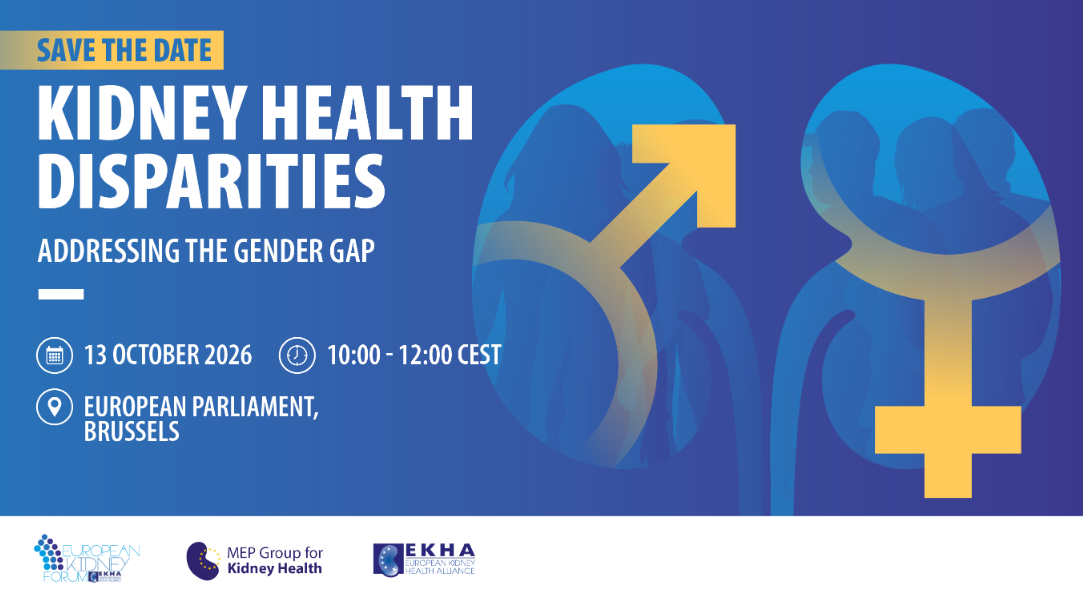
EKHA–European Kideney Forum — Kidney Health Disparities, Adresssing the Gender Gap, October 13, 2026
FEDERG at the European Kidney Forum: Addressing the Gender Gap in Kidney Health
FEDERG, the Federation of European Associations of Patients with Rare and Genetic Kidney Diseases, will participate in the European Kidney Forum organised by the European Kidney Health Alliance (EKHA), focusing on an increasingly important issue: Kidney Health Disparities – Addressing the Gender Gap.
Kidney health has traditionally been approached as gender-neutral. However, growing evidence shows that sex, gender, social roles and socioeconomic factors can influence the risk, diagnosis, treatment and outcomes of kidney disease. For women, kidney health is closely connected to their health throughout the life course—from adolescence and reproductive years to pregnancy, menopause and older age.
At the Forum, FEDERG will bring the voice of women living with and affected by kidney disease, highlighting three often interconnected perspectives: the woman patient, the woman caregiver and the woman patient representative and advocate.
As women living with kidney disease, patients may face specific challenges related to diagnosis, access to care, reproductive health, fertility, pregnancy, treatment and transplantation. As caregivers, women frequently take on significant unpaid responsibilities, supporting family members through diagnosis, dialysis, transplantation and long-term care, often alongside their professional and personal responsibilities.
And as patient representatives and advocates, women play a vital role in ensuring that patients’ experiences and needs are reflected in healthcare policies, research and decision-making. Their lived experience can help identify gaps that may otherwise remain invisible and contribute to more inclusive, coordinated and patient-centred kidney care.
For FEDERG, addressing the gender gap means recognising that women are not only patients within the kidney care pathway—they are also caregivers, advocates, decision-makers and essential voices within the kidney community.
We look forward to contributing to the discussion, sharing the experiences of women affected by rare and genetic kidney diseases, and working alongside European stakeholders to promote greater awareness, earlier identification, equitable access to care and a more gender-responsive approach to kidney health.